

We’ve all seen the headlines over the last couple of years. First, it was “AI is coming for your job,” then it was “AI is just a chatbot.” But now that we’re in 2026, the dust has settled, and the reality is much more interesting.
We aren’t just “using AI” anymore. We’re building AI native products.
If you’re running a business or leading a dev team, you’ve likely noticed that the old way of building software—writing every single line of logic and designing static menus—is starting to feel a bit like using a typewriter in the age of the internet. It works, but it’s slow, and it’s not how the world moves anymore.
Here is what I’m seeing on the ground and how it’s going to change the way you think about your next project.
It’s Not About “Features” Anymore; It’s About “Intent”
Remember when we used to spend weeks wireframing exactly where a button should go? In 2026, that’s becoming less relevant.
In an AI native world, we focus on Intent-Based Design. Think about it: instead of you navigating a complex dashboard to find a report, the software understands what you’re trying to achieve. It’s a shift from us learning how to use the software to the software learning how to be useful to us.
This is powered by natural language understanding and generative AI — your users describe what they want in plain terms, and the system responds intelligently, adapting in real time.
When you build this way — what some call intent-driven development — you’re creating an interface that adapts on the fly based on who is using it.
From “Coding” to “Orchestrating”
I get asked a lot if developers are still relevant. My answer is always: more than ever. But the job has changed. We’ve moved away from being “code monkeys.” Today, a great developer is more like a conductor of an orchestra. You have different AI agents—one handling the database, one writing the front-end components, one checking for security holes—and you are the one making sure they all play the same song.
These AI models handle everything from generating code and running CI/CD pipelines to flagging security vulnerabilities — all operating within a cloud native infrastructure. The developer’s role shifts from writing every line to reviewing, directing, and refining what the AI produces.
If you’re a developer reading this, your value isn’t in how fast you can type syntax; it’s in your ability to solve problems and see the “big picture” that the AI might miss. You’re the architect; the AI is the high-speed construction crew.
The Rise of “Agentic” Architecture
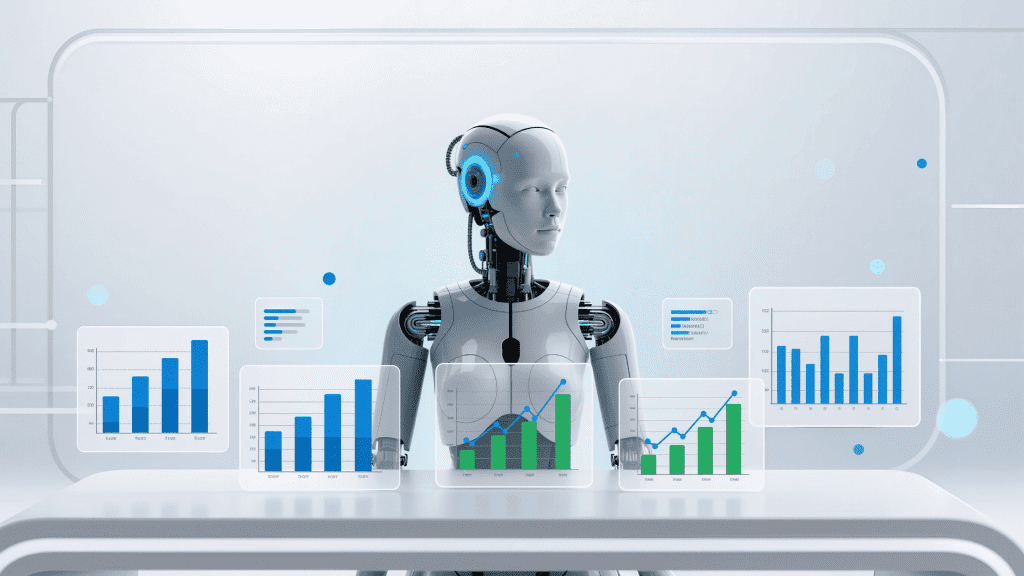
This is a term you’ll hear a lot this year. An “Agentic” product doesn’t just sit there waiting for you to click a button. It’s proactive.
Imagine an app that notices your server costs are spiking and, instead of just sending you an alert, it investigates the cause, prepares a fix, and asks: “Hey, I found a leak in the API calls, want me to patch it?” That’s the value we’re talking about. We’re building systems that have “memory” and “reasoning.” This isn’t just about being cool; it’s about reducing the “busy work” that eats up 80% of your team’s time.
Why Should You Care?
If you’re a business owner, you might be thinking, “This sounds expensive and complicated.” Actually, it’s the opposite.
The real value of AI native development is speed to market. In the past, taking a complex idea from a whiteboard to a working product took six months to a year. Now, we’re talking weeks.
You can test ideas faster. You can fail faster (and cheaper). And when you find something that works, you can scale it globally without needing to hire a hundred more people just to maintain the code.
Agentic Architecture
How AI Native Development Works in Practice
Understanding the concept is one thing — seeing how it plays out in a real product build is another. Here’s what the process actually looks like when a team builds AI natively from the ground up.
Step 1: Define the intent, not the interface
Instead of starting with wireframes, AI native teams start by mapping what the user is trying to achieve. Natural language becomes the design language — what would a user say to get this done? That question shapes the entire product.
Step 2: Choose and configure AI models
Not every feature needs the same AI model. A customer support flow might use a conversational model, while a fraud detection module uses a pattern-recognition model trained on your existing system’s data. Selecting and orchestrating the right models is where engineering expertise still matters enormously.
Step 3: Build agentic workflows
This is where CI/CD pipelines meet AI. Instead of manually deploying updates, AI-enabled agents monitor production, detect issues, and in some cases push fixes automatically — all while generating code suggestions for the next sprint. It’s a loop, not a one-time build.
Step 4: Connect to existing systems
Almost no business starts from zero. AI native development doesn’t require scrapping what you have. We typically layer AI-enabled capabilities on top of existing systems — modernizing workflows without disrupting operations that are already running.
Step 5: Iterate fast using real usage data
Because generative AI can rapidly prototype new features, teams can test ideas with real users in days. Cloud native deployment makes scaling those ideas — or pulling them back — equally fast.
This is driven development in the truest sense: every decision is informed by data, every iteration is faster than the last, and the product gets smarter with each release.
A Final Thought
Technology moves fast, but human needs stay the same. We still want tools that make our lives easier, our businesses more profitable, and our work more meaningful.
At SSNTPL, we’ve embraced this shift not because it’s a trend, but because it lets us do what we love: solving hard problems for you. We’re moving into an era where the “software” part of your business becomes an intelligent partner rather than just a digital tool.
The question isn’t whether AI will transform your product—it’s whether you’ll be the one leading that change or the one trying to catch up.
Frequently Asked Questions
1. Is AI native development only for big tech companies?
Not at all. In fact, smaller startups often benefit more because they can move faster. It allows a small team to build and manage a product that would have previously required dozens of engineers.
2. How long does it take to build an AI native products?
Because the development process is more “agent-driven,” you can often get a functional version of your product to market in weeks rather than months. It’s all about rapid iteration.
3. Does this make my software less secure?
Quite the opposite. AI-native systems can monitor for threats in real-time, identifying patterns that human eyes might miss, and reacting to security vulnerabilities instantly.
4. Can my existing business apps become AI native?
You don’t have to start from scratch. We often help businesses integrate AI-enabled modules into their existing systems to modernize them without the risk of a total teardown.