Claude Opus 4.7 Pricing, Access, and Free Options in 2026
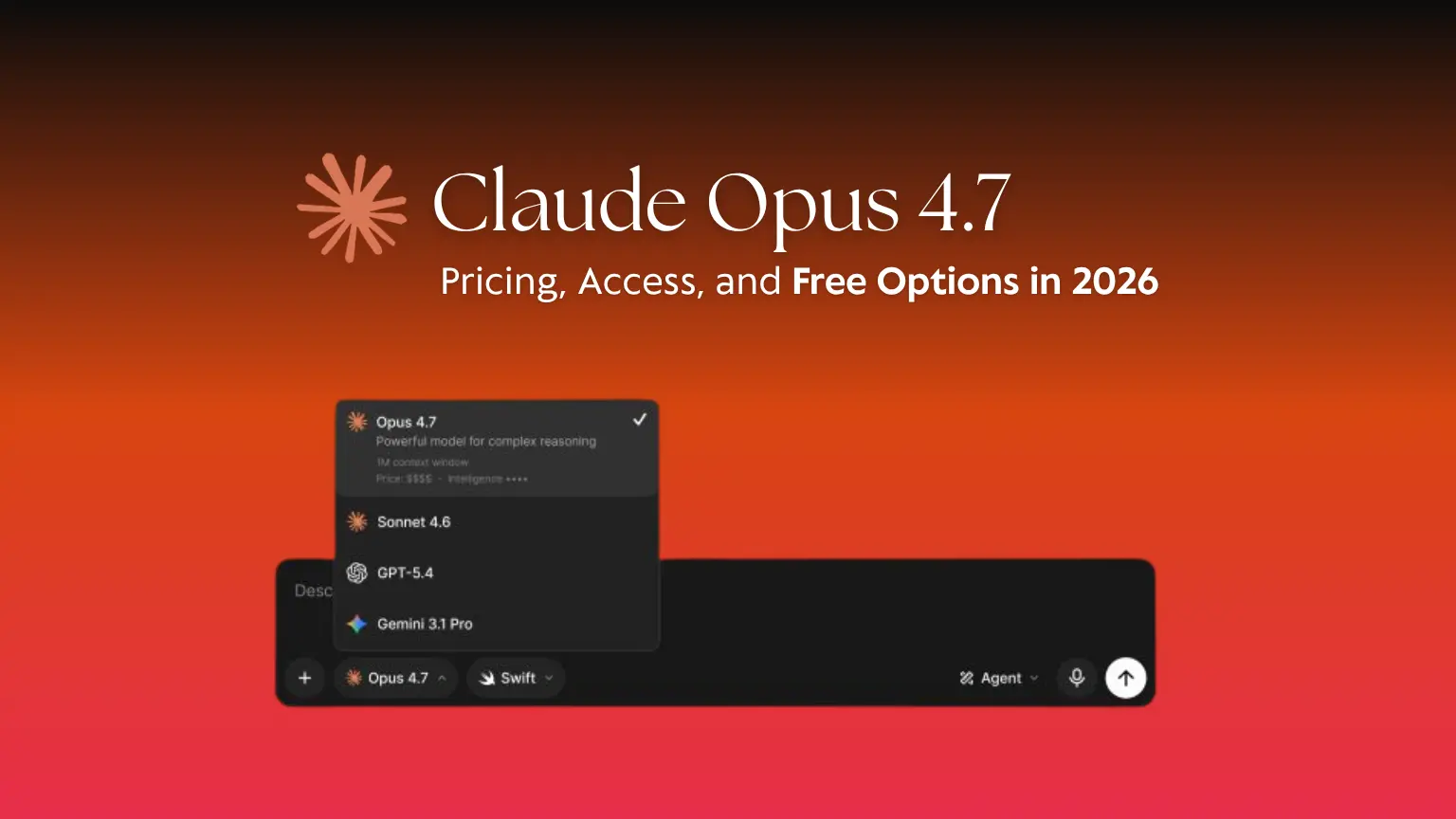
Claude Opus 4.7 is priced at $5.00 per million input tokens and $25.00 per million output tokens — identical to Opus 4.6’s listed rate. It is available on the Anthropic API, Claude consumer products, Amazon Bedrock, Google Cloud Vertex AI, and Microsoft Foundry. The listed price being unchanged does not mean your bill will be unchanged — a new tokenizer can raise real costs by up to 35% on the same prompts. This guide covers all of that.
Everything You Need in 60 Seconds
- API price: $5.00/M input tokens · $25.00/M output tokens (same as Opus 4.6)
- Cost savings: Up to 90% with prompt caching · 50% with batch processing
- US-only inference: 1.1x price multiplier via
inference_geo: "us"parameter - Platforms: Anthropic API, Claude.ai products, Amazon Bedrock, Google Cloud Vertex AI, Microsoft Foundry
- Free access: Not available free on the API. Consumer access via claude.ai varies by subscription tier.
- The catch: A new tokenizer means the same prompt can cost up to 35% more in real terms — even at the same listed rate.
- Model string:
claude-opus-4-7 - Context window: 1 million tokens input · 128,000 tokens output (300K on Batch API with beta header)
- Release date: April 16, 2026
Building with Claude/GPT? SSNTPL builds custom AI integrations, agentic workflows, and enterprise AI solutions. Talk to our team →
What Is Claude Opus 4.7?
Anthropic released Claude Opus 4.7 on April 16, 2026, approximately two months after Opus 4.6 — consistent with Anthropic’s roughly bimonthly release cadence. Anthropic positions it as a notable improvement on Opus 4.6 in advanced software engineering, with particular gains on the most difficult tasks.
It is especially effective for asynchronous agent pipelines where tasks unfold over time — large codebases, multi-stage debugging, and end-to-end project orchestration. Beyond coding, Opus 4.7 brings improved knowledge work capabilities, from drafting documents and building presentations to analyzing data. It maintains coherence across very long outputs and extended sessions, making it a strong default for tasks that require persistence, judgment, and follow-through.
Three capabilities distinguish it from 4.6 in practice: better instruction-following precision (more literal interpretation of prompts), significantly improved vision (max image resolution jumped from 1,568px to 2,576px), and stronger performance on long-running agentic tasks. Hex noted that “low-effort Opus 4.7 is roughly equivalent to medium-effort Opus 4.6” — which means if you were using high on Opus 4.6, xhigh on Opus 4.7 is the appropriate starting point for comparable task quality.
Importantly: Anthropic is explicit that Opus 4.7 is “less broadly capable than our most powerful model, Claude Mythos Preview,” which remains restricted to a limited set of enterprise platform partners and is not generally available. Opus 4.7 is the frontier model anyone can actually use.
Claude Opus 4.7 Official Pricing
As of May 2026 per Anthropic’s pricing page, Claude Opus 4.7 is priced at $5.00 per million input tokens and $25.00 per million output tokens. Output tokens cost 5x the price of input tokens — a consistent ratio across all current Claude models.
Full Pricing Table (Anthropic API — Standard Rates)
| Rate Type | Price per Million Tokens |
|---|---|
| Input tokens | $5.00 |
| Output tokens | $25.00 |
| Prompt cache write | ~$6.25 (1.25x input, 5-min cache) |
| Prompt cache write (1-hour) | ~$10.00 (2x input) |
| Prompt cache read | ~$0.50 (90% off input) |
| Batch API (async) | $2.50 input / $12.50 output (50% off) |
| US-only inference | $5.50 input / $27.50 output (1.1x multiplier) |
Opus 4.7 vs Opus 4.6 — Listed Price Comparison
| Opus 4.6 | Opus 4.7 | |
|---|---|---|
| Input (per 1M tokens) | $5.00 | $5.00 |
| Output (per 1M tokens) | $25.00 | $25.00 |
| Prompt caching discount | Up to 90% | Up to 90% |
| Batch processing discount | 50% | 50% |
| Context window | 1M tokens | 1M tokens |
| New tokenizer | No | Yes — up to 35% more tokens |
| Real cost per request | Baseline | Up to 35% higher |
The listed price is identical. The real cost may not be — which is covered in the hidden cost section below.
Per-1,000-Token Reference (for smaller calculations)
Claude Opus 4.7 costs $0.005000 per 1,000 input tokens and $0.025000 per 1,000 output tokens.
Where You Can Access Claude Opus 4.7
Opus 4.7 is available on the Claude Platform natively, and in Amazon Bedrock, Google Cloud’s Vertex AI, and Microsoft Foundry. Here’s what each access path means in practice:
Anthropic API (Direct)
The primary access path for developers. Use the model string claude-opus-4-7 in API calls. Available features include effort levels, vision, extended thinking, tool use, and streaming — this is the path for production systems, custom pipelines, and applications with specific latency or cost requirements.
Sign up and manage billing at platform.anthropic.com. Billing is pay-as-you-go based on token consumption. For workloads that need to run in the US, US-only inference is available at a 1.1x pricing multiplier using the inference_geo parameter. Global routing (the default) uses standard pricing.
Claude Consumer Products (claude.ai)
Claude.ai, the iOS/Android apps, and the Claude desktop app all provide access to Opus 4.7. Access and usage limits depend on your subscription tier. Free-tier users may access Opus 4.7 with restricted usage; Pro and higher plans get priority access and higher rate limits. Check claude.ai/pricing for current tier details, as these limits are updated regularly.
Amazon Bedrock
Claude Opus 4.7 is available on Bedrock through Claude in Amazon Bedrock (the Messages-API Bedrock endpoint). Bedrock offers two endpoint types: global endpoints (dynamic routing for maximum availability) and regional endpoints (guaranteed data routing through specific geographic regions). AWS Bedrock provides zero operator data access, meaning customer interactions remain private from both Anthropic and AWS personnel. Bedrock pricing is invoiced through AWS and may differ from direct Anthropic API rates — check the AWS console for current Bedrock-specific pricing.
Google Cloud Vertex AI
Opus 4.7 is available on Vertex AI with three endpoint types: global, multi-region, and regional. Pricing through Vertex AI is set by Google Cloud and billed through your GCP account. Vertex AI suits teams already running infrastructure on GCP who want unified billing and IAM controls.
Microsoft Foundry (Azure AI)
Opus 4.7 is available on Microsoft Foundry. This suits enterprise teams standardized on Microsoft Azure who want to access Claude through existing Azure infrastructure and enterprise agreements.
Claude Platform on AWS (Anthropic-Operated)
A separate option from native Bedrock: Claude Platform on AWS bills through AWS Marketplace using Claude Consumption Units (CCUs). Anthropic rates your token usage in USD at standard per-model rates, applies any negotiated discount, converts the result to CCUs at $0.01 per CCU, and reports the CCU quantity to AWS Marketplace hourly. Your AWS bill shows a single CCU line item.
Is Claude Opus 4.7 Free?
This is where clarity matters. Opus 4.7 is not free on the API — token consumption is always billed. What “free” can mean in practice:
Consumer access via claude.ai: Anthropic offers a free tier on claude.ai. Free-tier users can interact with Claude, but access to Opus 4.7 specifically (vs. Sonnet or Haiku) depends on current plan configuration and usage limits. Anthropic updates these limits regularly, so the most accurate current answer is always at claude.ai/pricing.
API access: There is no free tier on the Anthropic API. All API usage is billed from the first token. New API accounts do not receive free credits by default. Some developer programs or promotions may include credits — check the Anthropic developer portal for any current offers.
Trials and pilots: Anthropic does not currently offer a free Opus 4.7 trial on the API. Teams evaluating the model for production use typically run a small paid test with a capped budget before committing.
The practical answer: if you want to try Opus 4.7’s capabilities without setting up API billing, start with claude.ai on whatever plan you’re on and assess whether the model’s output quality justifies API investment for your workload.
Hidden Costs Most People Miss
This is the section that matters most if you’re migrating from Opus 4.6 or budgeting Opus 4.7 for production.
The Tokenizer Change: The 35% Problem
Opus 4.7 ships with a new tokenizer that can produce up to 35% more tokens for the same input text. Your real bill per request can go up even though the rate card did not.
The new tokenizer may use up to 35% more tokens for the same fixed text. Per-token prices are unchanged, but effective cost per request can increase by up to 35%. Anthropic recommends benchmarking workloads before migrating from Opus 4.6.
The multiplier isn’t uniform. Code, structured data, and technical content tend to see the largest tokenizer impact. Prose-heavy workloads may see a smaller delta. The only reliable number is your own — run your actual prompts through both models and measure.
Critically: tokenizer boundary changes also invalidate old cache entries on the first run. If you rely on prompt caching for cost efficiency, your cache hit ratio will drop to zero on the first requests after migration and rebuild gradually. Factor this into your cost forecast for the transition period.
Output Verbosity at Higher Effort Levels
Opus 4.7 introduces a new xhigh effort level (between high and max). Higher effort levels produce more thorough responses — which means more output tokens, priced at $25/M. If 4.7 is more thorough by default, your output tokens per response can climb on two axes at once: density (tokenizer) plus verbosity (effort). Output tokens cost 5x more than input tokens, so this compounds quickly.
US-Only Inference Premium
For Claude Opus 4.6, Claude Sonnet 4.6, and later models, specifying US-only inference through the inference_geo parameter incurs a 1.1x multiplier on all token pricing categories, including input tokens, output tokens, cache writes, and cache reads. If data residency requirements push you to US-only inference, budget for this 10% premium.
Fast Mode (Research Preview)
Fast mode, in beta, provides significantly faster output for Claude Opus 4.7 at premium pricing — 6x standard rates. This is for latency-critical workloads where speed matters more than cost. Most teams should not default to fast mode.
Higher-Resolution Vision = More Image Tokens
Opus 4.7’s maximum image resolution increased from ~1.15MP to ~3.75MP. Every image is now processed at higher fidelity automatically. More pixels means more tokens per image. If you’re passing screenshots or images where the extra resolution doesn’t add value — UI thumbnails, simple icons, low-detail diagrams — downsampling before sending reduces image token cost without sacrificing output quality.
Opus 4.7 vs Opus 4.6: Should You Migrate?
| Factor | Opus 4.6 | Opus 4.7 | Verdict |
|---|---|---|---|
| Listed token price | $5/$25 | $5/$25 | Tied |
| Real cost per request | Baseline | +0% to +35% (tokenizer) | 4.6 wins on cost |
| Coding performance | Strong | +13% on hard tasks (internal eval) | 4.7 wins |
| Instruction-following | Good | More literal/precise | 4.7 wins |
| Vision resolution | 1,568px / 1.15MP | 2,576px / 3.75MP | 4.7 wins |
| Long agentic tasks | Good | Substantially better | 4.7 wins |
| Prompt cache compatibility | Established | Resets on migration | 4.6 wins short-term |
| Available on Bedrock/Vertex/Foundry | Yes | Yes | Tied |
Bottom line: If you’re doing advanced coding, complex multi-step agents, or vision-heavy workloads, Opus 4.7’s quality gains justify the migration and potential tokenizer cost increase. If you’re running high-volume, cost-sensitive inference on well-established prompts and Opus 4.6 already meets your quality bar — evaluate carefully before switching. The rate card is the same; the bill may not be.
Who Should Use Opus 4.7 (and Who Shouldn’t)
Use Opus 4.7 if you are:
A developer or team running agentic coding workflows. Opus 4.7 lifts resolution by 13% over Opus 4.6 on a 93-task coding benchmark, including tasks neither Opus 4.6 nor Sonnet 4.6 could solve. If your agent is handling complex, multi-day engineering tasks autonomously, this is where Opus 4.7 earns its premium.
Running long-context or multi-session workflows. The 1M token context window is standard across Opus models, but Opus 4.7’s stronger coherence on very long outputs makes it more reliable for extended sessions — document pipelines, research agents, project orchestration.
Working with complex visual content. If your app processes detailed screenshots, technical diagrams, design mockups, or scanned documents, the improved resolution and vision accuracy is a material quality upgrade.
An enterprise team where quality differentiates. Hex noted that Opus 4.7 correctly reports when data is missing instead of providing plausible-but-incorrect fallbacks — a property that matters for financial analysis, legal work, and any context where confident hallucination is worse than a clear “I don’t know.”
Consider a cheaper model if you are:
Running high-volume classification, routing, or summarization. Sonnet 4.6 is 40% cheaper per input and output token than Opus. For most production inference — classification, RAG responses, content generation, basic tool use — it remains the right default. Opus 4.7 is overkill for these workloads.
At an early stage with tight API budgets. The 35% tokenizer uncertainty means production cost forecasting for Opus 4.7 requires actual measurement. If you can’t absorb that uncertainty, start with Sonnet 4.6 until you can benchmark properly.
Running simple, well-defined tasks. If your prompts are straightforward and Sonnet-tier output already meets your quality bar, you’re paying a 67% input token premium for capability you’re not using.
Practical Buying Advice
Before migrating a production workload: Replay a representative traffic sample through Opus 4.7 and measure token counts and cost side by side with your current model. Do not estimate — the 0–35% tokenizer delta is too wide to budget without real data.
On caching: Prompt caching remains the single highest-impact lever for controlling Opus 4.7 cost. Cache hit ratios reset to zero on first migration, then rebuild. Build this ramp into your first-month cost projection.
On effort levels: Start at xhigh if you were using high on Opus 4.6 for equivalent output quality. Monitor output token counts — more thorough responses at higher effort levels compound with the tokenizer change on the cost side.
On model routing: Most teams over-assign to Opus. A disciplined routing strategy — Opus 4.7 for complex reasoning and autonomous coding, Sonnet 4.6 for general-purpose inference, Haiku 4.5 for classification and routing — typically cuts Anthropic spend by 40–60% while maintaining quality where it matters.
Frequently Asked Questions
Is Claude Opus 4.7 free?
Opus 4.7 is not free on the API — all token consumption is billed from the first request. Consumer access via claude.ai varies by subscription tier: free-tier users may access Opus 4.7 with usage limits, while Pro and higher plans receive priority access and higher rate limits. The most accurate current information on consumer plan limits is at claude.ai/pricing, as Anthropic updates these regularly.
What is the Opus 4.7 API price?
Pricing for Opus 4.7 starts at $5 per million input tokens and $25 per million output tokens, with up to 90% cost savings with prompt caching and 50% savings with batch processing. US-only inference via the inference_geo parameter adds a 1.1x multiplier. Fast mode (beta) costs 6x standard rates and is not recommended for most use cases.
Is Claude Opus 4.7 available on Amazon Bedrock?
Claude Opus 4.7 is available on Bedrock through Claude in Amazon Bedrock (the Messages-API Bedrock endpoint). It supports both global endpoints and regional endpoints. Bedrock pricing is set by AWS and may differ from Anthropic direct API rates. Teams with existing AWS infrastructure and compliance requirements often prefer Bedrock for its data isolation guarantees.
Is Claude Opus 4.7 more expensive than Opus 4.6?
The listed token price is identical. The catch is that Opus 4.7 ships with a new tokenizer that can produce up to 35% more tokens for the same input text. Your real bill per request can go up even though the rate card did not. The delta depends on your content type — code and structured data see the largest increase; plain prose sees less. Run side-by-side tests before committing.
Why are my Opus 4.7 token costs higher if the listed price is the same?
Opus 4.7 ships with a new tokenizer that may use up to 35% more tokens for the same fixed text. Per-token prices are unchanged, but effective cost per request increases because more tokens are consumed for the same input. Additionally, higher effort levels (the new xhigh default in Claude Code) produce more verbose output, which increases output token consumption. Output is priced at 5x input, so this compounds quickly on complex tasks.
Final Take
Claude Opus 4.7 is Anthropic’s most capable generally available model as of May 2026 — meaningfully better than Opus 4.6 on coding agents, long-horizon tasks, and vision. The listed price is unchanged. Your actual bill may not be.
The tokenizer change is the story that most pricing guides miss. Before you migrate production workloads, benchmark your specific prompts and content types side by side. The 35% ceiling is a worst-case estimate, not a flat rate — your real delta could be anywhere from 0% to 35% depending on what you’re sending.
If you’re building AI-native applications and want help designing the right model routing strategy — when to use Opus 4.7, when Sonnet 4.6 is sufficient, and how to structure caching for cost efficiency — our team at SSNTPL works on exactly these AI architecture decisions. Talk to us →
Not sure which Claude model fits your stack — or how to keep your AI API costs from running away? SSNTPL helps engineering teams design model routing strategies, optimize prompt caching, and build production-ready AI pipelines on Anthropic, Bedrock, and Vertex AI. Book a free 30-minute architecture call → — no pitch, just answers to your specific questions.
Pricing data verified from Anthropic official documentation and API docs as of May 14, 2026. Token prices are subject to change — always verify at claude.ai/pricing and platform.anthropic.com/docs/pricing before budgeting.
Related articles
I Tested Claude Fable 5 Against Real Client Work — Not Benchmarks
Claude Fable 5 launched June 9, 2026. I ran it through 7 real client tasks — SEO strategy, SRS documentation, code review, competitor analysis, data interpretation, and long-form content. Here's what actually happened.
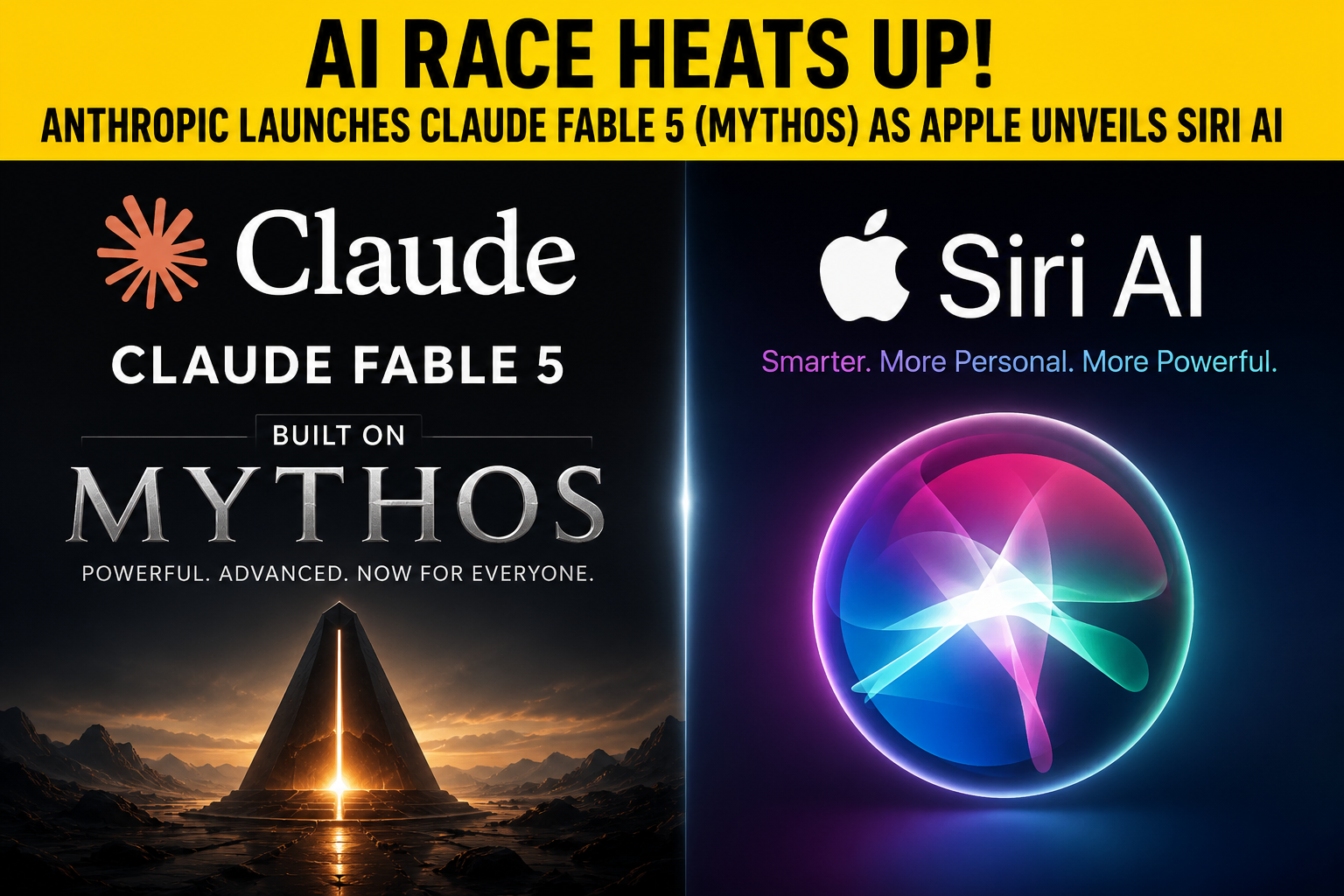
Claude Fable 5 vs Apple Siri AI: What Changed in June 2026
Claude Fable 5 launched June 9, 2026 at $10/$50 per million tokens — 80.3% on SWE-Bench Pro. Here's how it compares to Apple's rebuilt Siri AI and what both launches mean.
Claude Sonnet 5 "Fennec": Leaks, What Launched, and What's Next
The "Fennec" leak turned out to be Claude Sonnet 4.6. A true Sonnet 5 remains unconfirmed. Here's every verified fact, every remaining rumor, and what to watch next.
Let's build together
Let's build something that moves your business forward.
Tell us about your project and get a free, no-obligation estimate from our engineering team — typically within one business day.